
Article
Universal Article


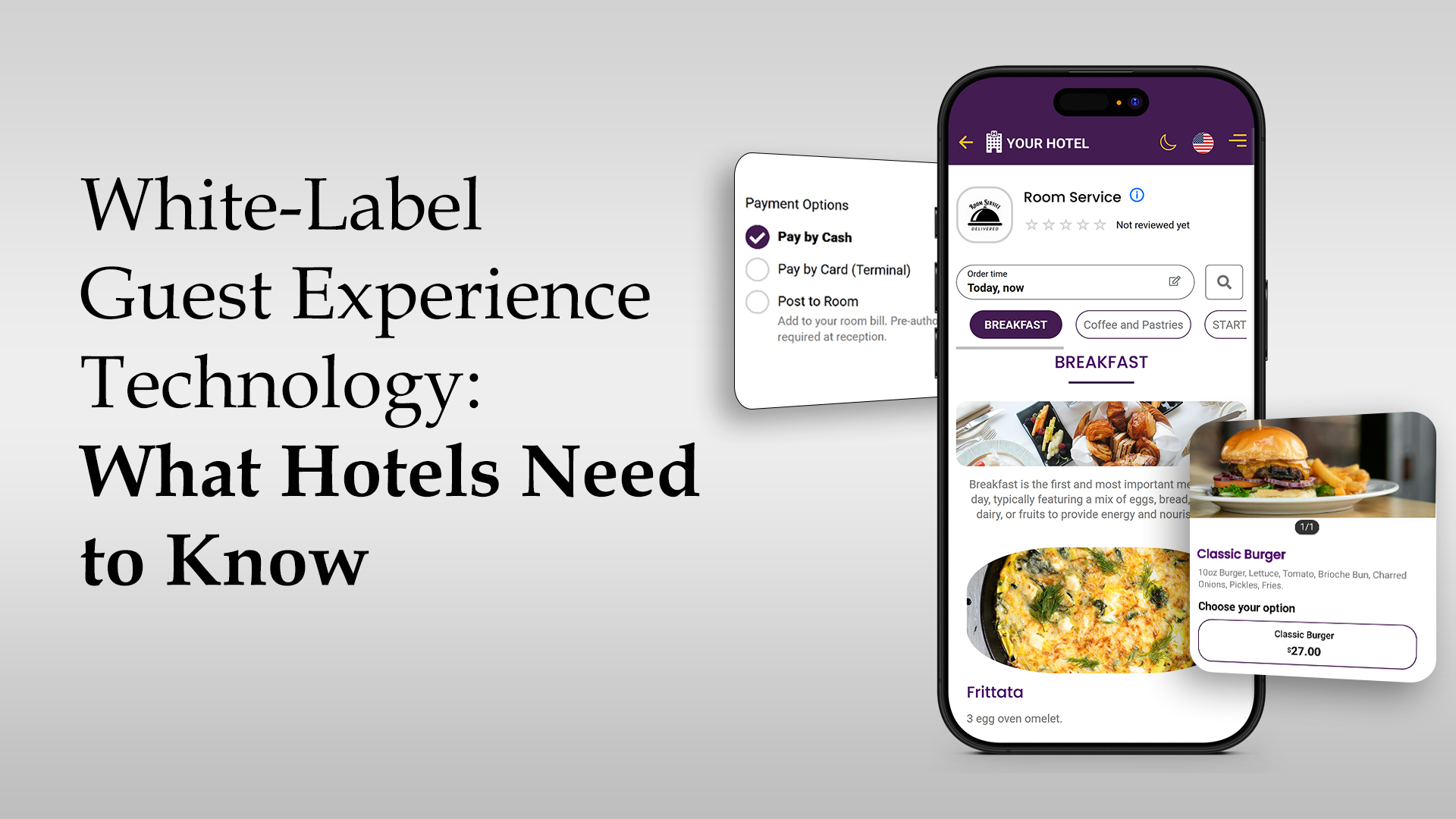
White-Label Guest Experience Technology: What Hotels Need to Know
When a guest scans a QR code in a hotel room, the experience that opens on their phone says something about the property, whether the hotel intends it to or not. A generic, unbranded ordering page with no logo, no colours, and no hint of the hotel's identity feels like a third-party tool. A branded, white-label experience feels like a natural extension of the stay. This distinction matters more than many hoteliers initially assume, particularly for boutique properties and groups that have invested heavily in brand identity.
White-label guest experience technology refers to digital platforms, concierge menus, ordering systems, guest apps, that hotels can present under their own branding rather than a third-party name. For owners, marketing managers, and hotel groups, understanding what this actually means in practice, and why it matters, is useful before evaluating any guest service technology.
Short Answer: What Is White-Label Guest Experience Technology?
White-label guest experience technology is a digital platform, such as a QR ordering menu, digital concierge, or guest app, that hotels can customise with their own branding, including logo, colours, and naming, rather than presenting it under the technology provider's own brand. This allows hotels to offer guests a consistent, branded experience across every digital touchpoint, while still benefiting from a ready-built platform rather than developing custom technology in-house.
Why Brand Consistency Matters in Guest Technology
Guest Trust and Comfort
Guests are more likely to trust and engage with a digital experience that looks and feels like it belongs to the hotel, rather than an unfamiliar third-party tool. A consistent visual identity reduces hesitation, particularly for guests unfamiliar with the property.
Brand Experience as a Differentiator
For boutique hotels and hotel groups that have invested in a distinct visual identity, every guest touchpoint, including digital ordering, is an opportunity to reinforce that identity. A generic ordering experience undercuts this investment.
Perceived Quality
Guests often associate a polished, on-brand digital experience with a higher standard of service overall, even if the underlying technology is functionally similar to an unbranded alternative.
White-Label vs Generic Hotel Apps
A generic, off-the-shelf hotel app typically displays the technology provider's branding, naming, and visual style, with limited customisation. A white-label platform, by contrast, is built to be presented as the hotel's own, guests see the hotel's logo, colours, and tone of voice throughout, with no visible reference to the underlying technology provider. For hotel groups managing multiple properties, this also means each property can maintain its own distinct identity while running on the same underlying platform.
Practical Considerations for Hotels Evaluating White-Label Platforms
Customisation Depth
Ask how deeply the platform can be branded, logo and colour changes are a baseline, but tone of voice, imagery, and menu structure should also reflect the property's identity.
Consistency Across Properties
For hotel groups, check whether the platform allows each property to maintain its own branding while still giving group management a centralised view of performance.
Guest-Facing Naming
Confirm whether the guest sees any reference to the technology provider's name, or whether the entire experience can be presented under the hotel's own name.
Implementation Effort
White-label setup typically requires providing brand assets, logo files, colour codes, imagery, early in the implementation process, so this should be planned for rather than left until launch.
Practical Implementation Tips
- Involve marketing or brand teams early. Guest-facing technology decisions benefit from the same brand oversight applied to other guest touchpoints.
- Use existing brand guidelines. Most platforms can apply existing colour palettes, logos, and typography directly, reducing setup time.
- Keep menu tone consistent with hotel voice. A boutique property with a warm, personal tone should reflect that in its digital menu copy, not just its visual design.
- Test the experience as a guest would. Review the platform on a phone, not just a desktop screen, since this is how guests will actually encounter it.
Mistakes to Avoid
- Treating branding as a cosmetic afterthought rather than a core part of the guest experience.
- Allowing inconsistent branding across properties within the same group, undermining a unified guest impression.
- Choosing a platform based on price alone without checking the depth of white-label customisation available.
- Neglecting to update branding when a hotel rebrands or renovates.
Example Scenario
A boutique hotel group with three distinct properties, each with its own name, colour palette, and personality, wanted a shared digital concierge platform without losing each property's individual identity. By using a white-label platform, each hotel presented its own branded ordering experience to guests, while group management retained a centralised dashboard to compare performance across all three properties. Guests at each hotel experienced what felt like a bespoke, property-specific tool, with no indication that the underlying technology was shared.
How This Connects to Broader Brand Strategy
White-label guest experience technology is part of a wider principle: every guest touchpoint, digital or physical, should reinforce the same brand impression. This matters as much for a single boutique property as it does for a large multi-location group, since inconsistent branding, even in something as small as an ordering menu, can subtly undermine an otherwise carefully managed guest experience.
Frequently Asked Questions
What does white-label mean in the context of hotel technology? White-label means a platform can be branded and presented entirely under the hotel's own identity, with no visible reference to the underlying technology provider.
Is white-label guest technology more expensive than generic alternatives? Pricing varies by provider, but white-label customisation is often included as a standard feature rather than a significant additional cost.
Can hotel groups use one white-label platform across multiple properties with different branding? Yes, most white-label platforms allow each property within a group to maintain distinct branding while sharing the same underlying technology and centralised reporting.
Does white-label technology require an in-house design team? No. Most hotels can apply branding using existing assets such as logo files and colour codes, without needing dedicated design resources.
Will guests know the platform isn't built entirely in-house by the hotel? Not typically. A well-implemented white-label platform presents no visible indication of a third-party provider, appearing as a natural extension of the hotel's own digital presence.
Is white-label technology only relevant for large hotel groups? No. Independent and boutique hotels often place even greater value on brand consistency, since their identity is frequently a core part of their guest appeal.
How long does it take to set up a white-label guest experience platform? This varies by provider, but most setups can be completed once brand assets are provided, often within a relatively short implementation window.
How Superbutler Solves This
Superbutler.ai is built as a fully white-label, AI-powered, multilingual digital concierge platform, meaning every guest-facing menu, message, Voice AI Assistant interaction, and AI Chat Assistant conversation can carry your hotel's own branding and tone rather than a generic, third-party feel. For owners, marketing teams, and hotel groups, this protects brand consistency while still delivering the core pillars that matter commercially: increased ancillary revenue from better service visibility, reduced operational cost from less manual admin, and a more polished guest experience that supports stronger reviews.
Conclusion
White-label guest experience technology allows hotels to offer guests a consistent, branded digital experience without building custom technology from scratch. For boutique properties and hotel groups alike, this consistency reinforces guest trust and reflects the same care given to every other part of the brand experience.
To see how a white-label digital concierge could look under your own branding, request a demo with Superbutler.