
Article
Universal Article


What Is a Digital Concierge for Hotels? A Complete Guide
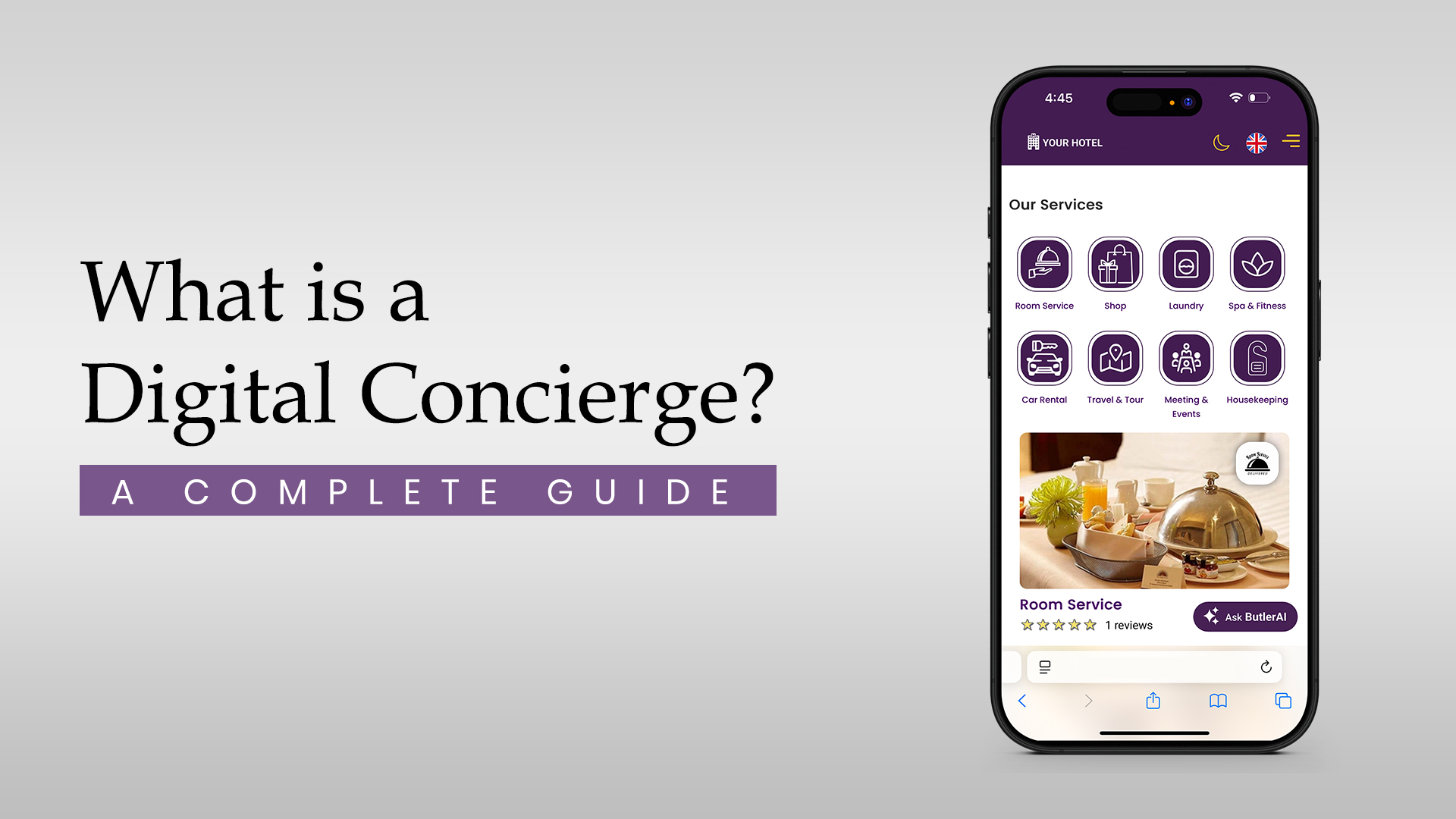
Hotel guests today expect the same ease of ordering they get everywhere else in their lives. They can order groceries, book a taxi, or get dinner delivered in a few taps. Yet in many hotels, requesting room service still means picking up a phone, waiting for it to be answered, and hoping the order is written down correctly. This gap between guest expectation and hotel reality is exactly why digital concierge technology has become one of the fastest-growing categories in hospitality.
A digital concierge for hotels is not about replacing the people who make a stay memorable. It is about giving those teams a clearer, faster way to receive and manage requests, while giving guests a simple way to see what is available and order it themselves. For general managers and owners trying to grow ancillary revenue without growing headcount, understanding what this technology actually does, and does not do, is the first step.
This guide explains what a digital concierge is, how it works in practice, and why hotels of every size are adopting it.
Short Answer: What Is a Digital Concierge for Hotels?
A digital concierge for hotels is a software platform, usually accessed by scanning a QR code, that lets guests browse and order in-house services such as room service, housekeeping, laundry, spa, transport, and concierge support without downloading an app or calling the front desk. Staff receive these requests through tools they already use, such as WhatsApp, email, or a Backoffice dashboard, allowing faster fulfilment with less manual coordination. It is designed to support hotel teams, not replace them.
How a Digital Concierge Actually Works
The Guest Side
A guest typically scans a QR code placed in the room, at reception, by the pool, or in a lift. This opens a branded, mobile-friendly menu of everything the property offers, no app store, no account creation, no password. From there, the guest can browse categories like dining, housekeeping, spa, or local experiences, select what they need, and submit the request in a few taps.
The Staff Side
Once a request is submitted, it does not disappear into a black hole. It is routed instantly to the relevant team, housekeeping, F&B, or concierge, through a channel they already monitor, such as WhatsApp notifications, a Backoffice dashboard, an order app, or in some cases a kitchen printer or KDS. Staff can see exactly what was requested, by whom, and when, which removes the guesswork that comes with a rushed phone call.
The Management Side
Behind the scenes, hotel management gets visibility into order volume, popular services, response times, and revenue generated through the platform. This reporting layer is often what turns a "nice to have" guest convenience tool into a measurable business asset.
Why This Matters for Hotels Right Now
The Front Desk Workload Problem
Front desk and reception teams are frequently the bottleneck for service requests that have nothing to do with check-in or check-out. Every call about extra towels, a late checkout, or a dinner reservation pulls attention away from guests standing at the desk. A digital concierge absorbs much of this routine traffic, letting the request go directly to the team that can act on it
The Ancillary Revenue Problem
Many hotels have services that guests simply do not know about. A spa treatment, a late-night snack menu, or an airport transfer might exist, but if it is not visible at the moment a guest is deciding what to do, it rarely gets ordered. A digital concierge puts the full menu of services in front of the guest at the right moment, when they are sitting in the room, by the pool, or waiting for transport, which tends to increase the number of services guests actually use.
The Consistency Problem
In multi-property groups, service quality can vary significantly from one hotel to the next depending on staff experience and local habits. A shared digital concierge platform helps standardise what is offered and how requests are handled, while still allowing each property to keep its own menu, services, and branding.
What a Digital Concierge Is Not
It is worth being direct about this: a digital concierge is not designed to replace concierge desks, front office staff, or housekeeping teams. The technology exists to reduce repetitive admin, answering the same questions, writing down the same requests, chasing up the same orders, so that staff can spend more time on the parts of guest service that genuinely benefit from a human touch, such as local recommendations, problem-solving, and warm hospitality.
Practical Implementation Tips
- Start with your highest-volume services. Room service, housekeeping, and spa are usually the best starting categories because they generate the most repetitive requests.
- Keep menus simple at launch. A clear, well-organised menu with fewer categories performs better than an overwhelming one. You can expand once staff and guests are comfortable.
- Brief staff before guests see it. Staff should understand how requests will arrive and who is responsible for actioning them, before the QR codes go live.
- Place QR codes where decisions happen. In the room, by the bed, near the bathroom, by the pool, and in the lift tend to generate the most engagement.
- Review reporting weekly at first. Early data tells you quickly which services guests want more visibility on.
Common Mistakes to Avoid
- Launching without telling housekeeping or F&B teams how requests will reach them.
- Overloading the menu with every possible service on day one.
- Treating the platform as "set and forget" rather than reviewing performance regularly.
- Assuming guests will not use it because of age or destination, adoption is consistently broad across demographics when the experience is simple.
Example Scenario
Picture a 60-room boutique hotel with a small front office team and one F&B outlet. Before introducing a digital concierge, most room service orders came in by phone, often during the busiest check-in period of the evening, leading to missed calls and delayed orders. After introducing QR-based ordering, guests place orders directly from their room, the kitchen receives a clear, written ticket, and front desk staff are freed up to focus on arriving guests. The hotel does not add a single new staff member, but order volume and guest satisfaction both improve because the process is simply easier on both sides.
Where Superbutler Fits
Superbutler.ai is an AI-powered digital concierge and guest service platform built specifically for this purpose. Hotels can launch branded QR ordering for room service, housekeeping, laundry, spa, transport, tours, and concierge support, with staff receiving requests through WhatsApp, email, a backoffice dashboard, or integrated systems where needed. It is built to support existing teams and existing workflows, not to introduce a parallel system that staff have to learn from scratch.
If you are exploring digital concierge technology for your property, it is worth seeing how the guest and staff experience works in practice before deciding whether it fits your operation.
Frequently Asked Questions
Does a digital concierge require guests to download an app? No. Most modern digital concierge platforms, including Superbutler, work entirely through a web-based experience accessed via QR code, with no app download or account required.
Will a digital concierge replace my front desk or concierge team? No. It is designed to handle repetitive, predictable requests so staff have more time for guest interactions that genuinely need a human response.
What services can guests typically order through a digital concierge? Common categories include room service, housekeeping, laundry, spa, transport, tours, and general concierge requests, though this varies by property.
How do staff receive guest requests? Most platforms route requests through channels staff already use, such as WhatsApp, email, a dashboard, an order app, or integrated kitchen and POS systems.
Is a digital concierge suitable for small or independent hotels? Yes. Independent hotels, guest houses, and boutique stays often see strong results because the technology directly addresses the workload pressure of small teams.
How quickly can a hotel launch a digital concierge platform? Implementation timelines vary, but many properties can launch a basic version within a short setup period, then expand the menu and integrations over time.
Does a digital concierge improve guest reviews?
Faster response times and easier access to services tend to support better guest satisfaction, though results depend on how well the platform is implemented and promoted to guests.
Conclusion
A digital concierge for hotels is, at its core, a simple idea executed well: make every in-house service easy for guests to find and order, and make every request easy for staff to receive and act on. For hotel owners and operators looking to grow ancillary revenue, reduce front desk pressure, and improve guest experience without expanding headcount, it is one of the most practical technology investments available today.
If you want to see how this could work for your property, Book a free 20-minute consultation with the Superbutler team.