
Article
Universal Article


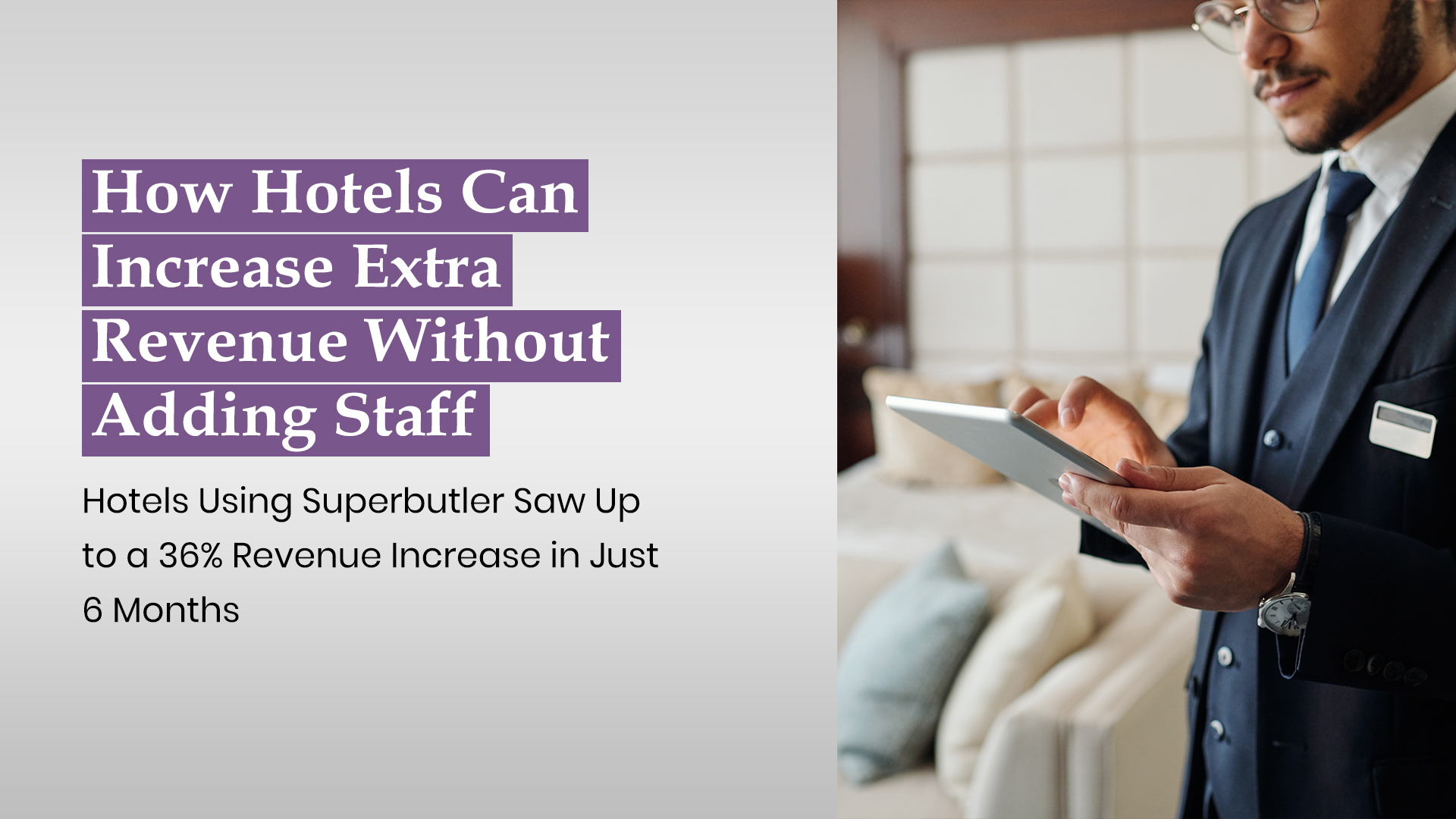
How Hotels Can Increase Extra Revenue Without Adding Staff
Room revenue gets most of the attention in hotel planning, but ancillary revenue, everything from room service and spa treatments to laundry, tours, and transport, is often where the easiest, fastest gains are hiding. The challenge most hotels face is not a lack of services. It is that those services are not visible, not easy to order, or not consistently offered to every guest. Solving that problem rarely requires more staff. It requires making existing services easier to discover and order.
This matters more than ever for owners and revenue managers under pressure to grow profitability without expanding payroll. The good news is that ancillary revenue growth and operational efficiency are not competing goals, when implemented well, the same technology that grows ancillary spend also reduces the manual workload behind it.
Short Answer: How Can Hotels Increase Ancillary Revenue Without Adding Staff?
Hotels can increase ancillary revenue without adding staff by making existing services easier for guests to discover and order, typically through a digital concierge or QR ordering platform. Rather than relying on guests to ask staff what is available, the hotel puts a clear, browsable menu of services directly in front of guests at key moments of their stay. This increases order volume and average spend per guest, while reducing the manual phone calls and paperwork that come with the same number of requests handled the old way.
Why Ancillary Revenue Gets Left on the Table
Guests Don't Know What's Available
Many hotels offer a wider range of services than guests realise, late-night dining, in-room spa treatments, airport transfers, curated tours. If these are only mentioned at check-in or buried in a printed directory, most guests will never act on them.
Ordering Friction Discourages Spend
Even when a guest knows a service exists, picking up the phone to ask about it, describe what they want, and wait for confirmation introduces enough friction that many guests simply decide it isn't worth the effort.
Staff Have Limited Time to Upsell
Front desk and housekeeping staff are often too busy with core duties to proactively suggest add-ons during every guest interaction. Even well-trained staff cannot consistently upsell at the volume a digital menu can.
The Operational Impact
This is where the staffing connection becomes clear. The problem is not that hotels lack people willing to take requests, it's that turning every request into a phone call or a face-to-face conversation does not scale. A digital concierge platform removes that bottleneck by letting guests self-serve for routine requests, while staff focus their time on fulfilment and on guests who need a more personal touch.
How Digital Concierge Technology Grows Ancillary Revenue
Visibility at the Right Moment
A QR-based service menu, available in the room, by the pool, or in transit areas, puts the full range of services in front of guests exactly when they are deciding what to do, not just at check-in when they're focused on settling in.
Lower-Friction Ordering
When ordering takes less than a minute and requires no phone call, guests are simply more likely to follow through, particularly for smaller or impulse-style purchases like a late-night snack or an extra spa add-on.
Cross-Selling Without Extra Effort
A well-organised digital menu naturally surfaces related services, a guest ordering breakfast might also see and add a fresh juice or a daily newspaper, increasing average order value without any staff intervention.
Reporting That Shows Where the Opportunity Is
Order data reveals which services guests actually want more of, helping revenue managers focus promotional effort and menu design where it will have the most impact.
Practical Implementation Tips
- Audit your current service list first. Many hotels are surprised by how many services exist but are poorly promoted.
- Lead with high-margin, easy-to-fulfil services. Spa, in-room dining add-ons, and curated experiences typically offer strong margins and clear guest appeal.
- Use clear, benefit-led menu language. "Unwind with an in-room massage" tends to outperform a flat service name with no context.
- Promote the menu at multiple touchpoints. Check-in, in-room signage, and digital welcome messages all reinforce awareness.
- Review performance monthly. Track which categories are growing and which need better positioning or pricing.
Mistakes to Avoid
- Assuming guests will seek out services themselves without prompting.
- Overpricing convenience items in a way that discourages trial.
- Failing to update the menu as seasonal services or promotions change.
- Treating ancillary revenue growth as a one-off project rather than an ongoing area of focus.
Example Scenario
A 90-room resort property had a spa, an in-room dining menu, and a tour desk, but all three were significantly underused relative to occupancy. After introducing a digital concierge with QR ordering across rooms and common areas, guests began ordering spa treatments and tours directly from their phones, often outside staffed desk hours. The resort did not add any new staff to handle this, existing teams simply received clearer, better-organised requests through their existing WhatsApp and dashboard workflow, while ancillary order volume increased measurably across all three categories.
Connecting This to Broader Hotel Strategy
Ancillary revenue growth works best as part of a wider digital concierge strategy that also includes housekeeping and concierge requests. The same platform that helps guests order an in-room massage can also handle a request for extra towels, creating one consistent, low-friction guest experience rather than a patchwork of separate tools.
Frequently Asked Questions
What counts as extra revenue in a hotel? Ancillary revenue includes income beyond room rates, such as room service, spa treatments, laundry, transport, tours, and other add-on services.
Does increasing ancillary revenue require new staff? No. Most ancillary revenue growth comes from improving visibility and ease of ordering for services hotels already offer, which existing teams can fulfil.
How quickly can hotels see results from better service visibility? Many hotels notice increased order volume within the first few weeks of launching a digital menu, though results vary by property and promotion.
Which services typically see the biggest ancillary revenue gains? Room service, spa, and curated experiences or tours often show the strongest response to improved visibility and ordering ease.
Can small or independent hotels benefit from this approach? Yes. Independent hotels and guest houses often see a meaningful percentage increase in ancillary spend because their starting visibility is typically lower.
How does a digital concierge platform track ancillary revenue? Most platforms include reporting dashboards that show order volume, revenue by category, and trends over time.
Is it worth promoting ancillary services if margins are already thin? Yes, provided pricing reflects true cost and value. Even modest-margin services contribute to overall profitability when order volume increases meaningfully.
Conclusion
Ancillary revenue is rarely limited by what a hotel offers, it is limited by how easily guests can find and order it. By making services visible at the right moment and removing ordering friction, hotels can grow ancillary spend meaningfully without expanding their teams. The same technology that drives this growth also reduces the manual workload behind each request, making it a rare case of more revenue and less admin at the same time.
To see what this could mean for your property, calculate your hotel's revenue opportunity or book a free 20-minute consultation with the Superbutler team.